Safety & Security
Spill Response at DuPage Airport
Below is a Spill Response Flow Chart identifying appropriate actions to take in response to a spill of oil or fuel at DuPage Airport.
Spill Response Level
Incidental Spills
- The spill is small, less than 1 gallon.
- The spill can be easily contained.
- The spill is unlikely to reach a navigable waterway, storm sewer, or sanitary drain.
- Cleanup procedures do not pose a health or safety hazard.
- Proper response equipment is available for a safe cleanup.
- Responding personnel have completed annual spill training.
- Responding personnel are comfortable with cleaning up the spill.
Response by facility personnel possible
Non-Incidental Spills
- The spill is large enough to spread beyond the immediate area (generally 1 to 20 gallons in size).
- Spill may reach a navigable waterway, storm sewer, or sanitary drain.
- Spill may require special equipment or training to clean up.
- If facility personnel address the spill, responding personnel have completed annual SPCC training.
- If responding personnel are not comfortable cleaning up the spill, use a third-party contractor.
Response by facility personnel possible
Imminent Danger Spills
- Based on the assessment of the fuel delivery driver or trained oil handling employee(s), the spill poses an immediate hazard to human health or the environment.
- There is danger of fire or explosion (e.g., a spill of greater than 1 gallon of gasoline).
- Spill involves injury to personnel.
- The spill has reached a navigable waterway, storm sewer, or sanitary drain.
- The spill cannot be contained.
Requires response by the West Chicago Fire Department – Call 911
Contact Information
FEC: Dan Barna, Director of Operations & Facilities
Work: +1 (630) 208-6184 / Cell: +1 (630) 352-9776
Alternate FEC: Joe Long, Field Maintenance Manager
Work: +1 (630) 208-5602 / Cell: +1 (630) 632-5744
Other Phone Numbers for Emergency Coordinator Use Only:
llinois Emergency Management Agency: +1 (800) 782-7860
EPA Region 5 Hotline: +1 (800) 621-8431
National Response Center: +1 (800) 424-8802
West Chicago Public Works Department: +1 (630) 293-2255
Other Phone Numbers:
RCRA Hotline: +1 (800) 424-9346
Cleanup Contractor:
HazChem Environmental Corp: +1 (630) 458-1910
Tradebe Environmental Services: +1 (800) 914-9111
Heritage Environmental Services: +1 (877) 938-7948
FEC = Facility Emergency Coordinator
Spill Response Procedure
Secure the site.
Determine the level of the spill:
- Incidental Spill (typically less than 1 gallon)
- Non-Incidental Spill (typically 1–20 gallons)
- Imminent Danger Spill
If the spill is Incidental (typically <1 gallon):
- Notify FEC or Alternate FEC.
- Select appropriate PPE based on SDS.
- Take safety precautions to stop, stabilize, and contain the spill.
- Clean up the spill and properly dispose of cleanup materials.
- Process complete.
If the spill is Non-Incidental (typically 1–20 gallons):
- Notify FEC or Alternate FEC.
- Determine (in consultation with the FEC) whether the spill is within
available cleanup capabilities and safe to respond to.
If YES (safe to respond):
- Select appropriate PPE based on SDS. Take safety precautions to stop, stabilize, and contain the spill.
If NO (not safe to respond):
- Contact a spill response contractor to assist with cleanup.
Then proceed with:
- Clean up the spill and properly dispose of cleanup materials.
- During cleanup activities, collect the following information to complete the Spill Incident Report: Photographs, Sketches, Times, and Actions taken.
- Determine whether the spill involves a release to the environment.*
If YES:
- Notify appropriate agencies in coordination with the DAA FEC.
- Complete all required internal documentation in coordination with
the DAA FEC. - Process complete.
If NO:
- Complete all required internal documentation in coordination with
- the DAA FEC.
- Process complete
If the spill is an Imminent Danger Spill:
- Call 911 immediately.
*Definition – Release to the Environment (for oil spills only):
- A spill is considered a release to the environment if any of the following occur:
- A discharge causes a film, sheen, or discoloration on the surface of the water or adjoining shorelines.
- A discharge causes a sludge or emulsion to be deposited beneath the surface of the water or adjoining shorelines.
- 25 gallons or more of oil are released into the environment (excluding navigable waters).
Stormwater Pollution Prevention Plan (SWPPP)
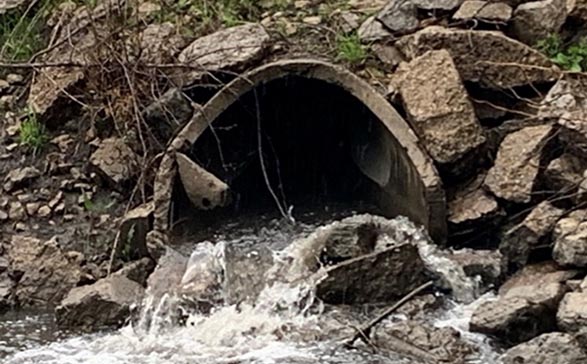
In accordance with the National Pollution Discharge Elimination System (NPDES) program under Illinois Environmental Protection Agency regulations, the DuPage Airport Authority is required to file and maintain a General Stormwater Permit.
Such permit pertains to all activities conducted on Airport property including those activities conducted by tenants and businesses. In conjunction with the permit, a Stormwater Pollution Prevention Plan (“SWPPP”) must also be maintained. The SWPPP facilitates compliance of the permit and addresses potential pollutant sources, programs, practices and identifies stormwater management controls.
2025 DuPage Airport Stormwater Pollution Prevention Plan and Spill Response Training (PDF)
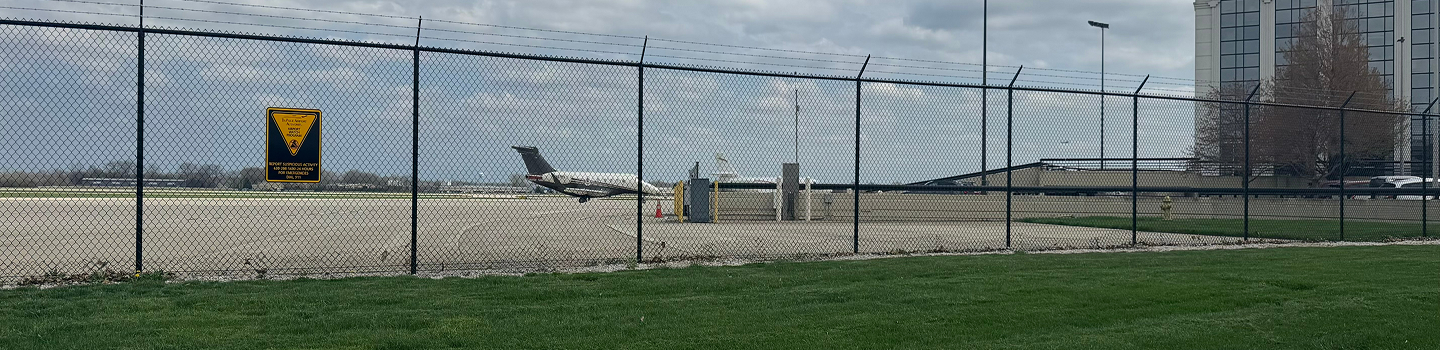
Airport Security and Reporting Suspicious Activity
The DuPage Airport Authority is proactive and very conscious of security for its tenants, customers and employees. We ask that you report any suspicious activity immediately to any of the following numbers:
Police: 911
DuPage Flight Center (24-Hours): +1 (630) 208-5600
Airport Watch Program: 866-GA-SECURE (866-427-3287)
- Report suspicious activity, including:
- Anyone attempting to access an aircraft by force, without keys, or using tools such as crowbars or screwdrivers.
- Individuals unfamiliar with aviation procedures who appear to be inspecting or attempting to operate an aircraft.
- Misuse of aviation terminology, or an unusual eagerness to use aviation lingo incorrectly.
- People or groups determined to keep to themselves or avoid interaction.
- Individuals loitering without a clear or legitimate reason to be on the airport.
- Out-of-the-ordinary videotaping or photography of aircraft or hangars.
- Dangerous or inappropriate cargo being loaded into an aircraft, including explosives, chemicals, or openly displayed weapons.
- Aircraft with unusual or obviously unauthorized modifications.
- Anything that strikes you as wrong—trust your instincts and follow through.
When reporting suspicious activity, details matter. Pay attention to height, weight, clothing, distinguishing features, aircraft type, color scheme, and tail number. Specific information helps authorities respond appropriately.